|
mutLBSgeneDB |
| |
| |
| |
| |
| |
| |
|

| Gene summary for CTSF |
 Gene summary Gene summary |
| Basic gene Info. | Gene symbol | CTSF |
| Gene name | cathepsin F | |
| Synonyms | CATSF|CLN13 | |
| Cytomap | UCSC genome browser: 11q13 | |
| Type of gene | protein-coding | |
| RefGenes | NM_003793.3, | |
| Description | - | |
| Modification date | 20141219 | |
| dbXrefs | MIM : 603539 | |
| HGNC : HGNC | ||
| Ensembl : ENSG00000174080 | ||
| HPRD : 04643 | ||
| Vega : OTTHUMG00000167090 | ||
| Protein | UniProt: Q9UBX1 go to UniProt's Cross Reference DB Table | |
| Expression | CleanEX: HS_CTSF | |
| BioGPS: 8722 | ||
| Pathway | NCI Pathway Interaction Database: CTSF | |
| KEGG: CTSF | ||
| REACTOME: CTSF | ||
| Pathway Commons: CTSF | ||
| Context | iHOP: CTSF | |
| ligand binding site mutation search in PubMed: CTSF | ||
| UCL Cancer Institute: CTSF | ||
| Assigned class in mutLBSgeneDB | B: This gene belongs to targetable_mutLBSgenes. | |
| Gene ontology having evidence of Inferred from Direct Assay (IDA) from Entrez |
| GO ID | GO Term | PubMed ID |
| Top |
| Ligand binding site mutations for CTSF |
| Cancer type specific mutLBS sorted by frequency |
| LBS | AAchange of nsSNV | Cancer type | # samples | W453 | G454S | BRCA | 1 | L337 | L337M | COAD | 1 | M334 | C333F | LUAD | 1 | Q410 | G408D | STAD | 1 |
| cf) Cancer type abbreviation. BLCA: Bladder urothelial carcinoma, BRCA: Breast invasive carcinoma, CESC: Cervical squamous cell carcinoma and endocervical adenocarcinoma, COAD: Colon adenocarcinoma, GBM: Glioblastoma multiforme, LGG: Brain lower grade glioma, HNSC: Head and neck squamous cell carcinoma, KICH: Kidney chromophobe, KIRC: Kidney renal clear cell carcinoma, KIRP: Kidney renal papillary cell carcinoma, LAML: Acute myeloid leukemia, LUAD: Lung adenocarcinoma, LUSC: Lung squamous cell carcinoma, OV: Ovarian serous cystadenocarcinoma, PAAD: Pancreatic adenocarcinoma, PRAD: Prostate adenocarcinoma, SKCM: Skin cutaneous melanoma, STAD: Stomach adenocarcinoma, THCA: Thyroid carcinoma, UCEC: Uterine corpus endometrial carcinoma. |
| Top |
| Protein structure related information for CTSF |
| Relative protein structure stability change (ΔΔE) using Mupro 1.1 Mupro score denotes assessment of the effect of mutations on thermodynamic stability. (ΔΔE<0: mutation decreases stability, ΔΔE>0: mutation increases stability) |
 : nsSNV at non-LBS : nsSNV at non-LBS : nsSNV at LBS : nsSNV at LBS |
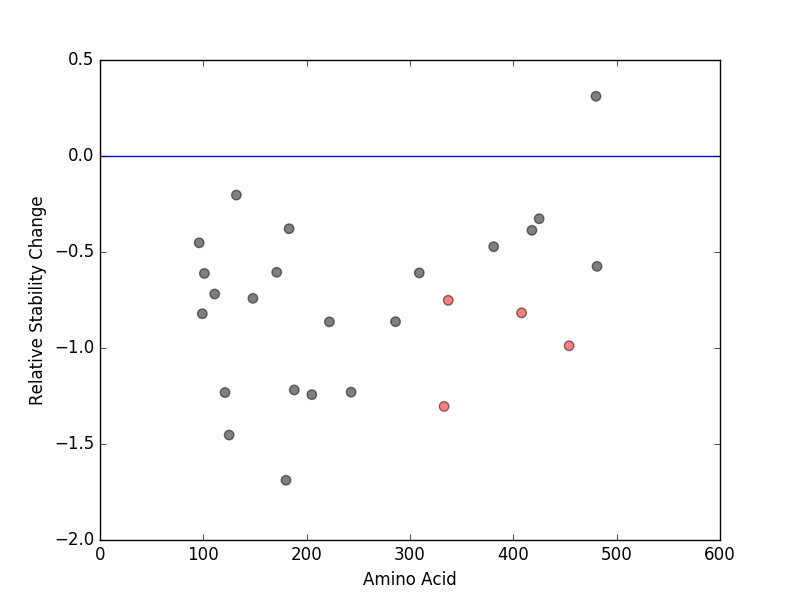 |
| nsSNVs sorted by the relative stability change of protein structure by each mutation Blue: mutations of positive stability change. and red : the most recurrent mutation for this gene. |
| LBS | AAchange of nsSNV | Relative stability change | M334 | C333F | -1.3042529 | W453 | G454S | -0.98849702 | Q410 | G408D | -0.81702822 | L337 | L337M | -0.7516526 |
| (MuPro1.1: Jianlin Cheng et al., Prediction of Protein Stability Changes for Single-Site Mutations Using Support Vector Machines, PROTEINS: Structure, Function, and Bioinformatics. 2006, 62:1125-1132) |
| Structure image for CTSF from PDB |
| Top |
| Differential gene expression and gene-gene network for CTSF |
| Differential gene expression between mutated and non-mutated LBS samples in all 16 major cancer types |
| Differential co-expressed gene network based on protein-protein interaction data (CePIN) |
| Top |
| Top |
| Phenotype information for CTSF |
| Gene level disease information (DisGeNet) |
| Disease ID | Disease name | # PubMed | Association type |
| umls:C3715049 | CEROID LIPOFUSCINOSIS, NEURONAL, 13 | 1 | GeneticVariation |
| Mutation level pathogenic information (ClinVar annotation) |
| Allele ID | AA change | Clinical significance | Origin | Phenotype IDs |
| Top |
| Pharmacological information for CTSF |
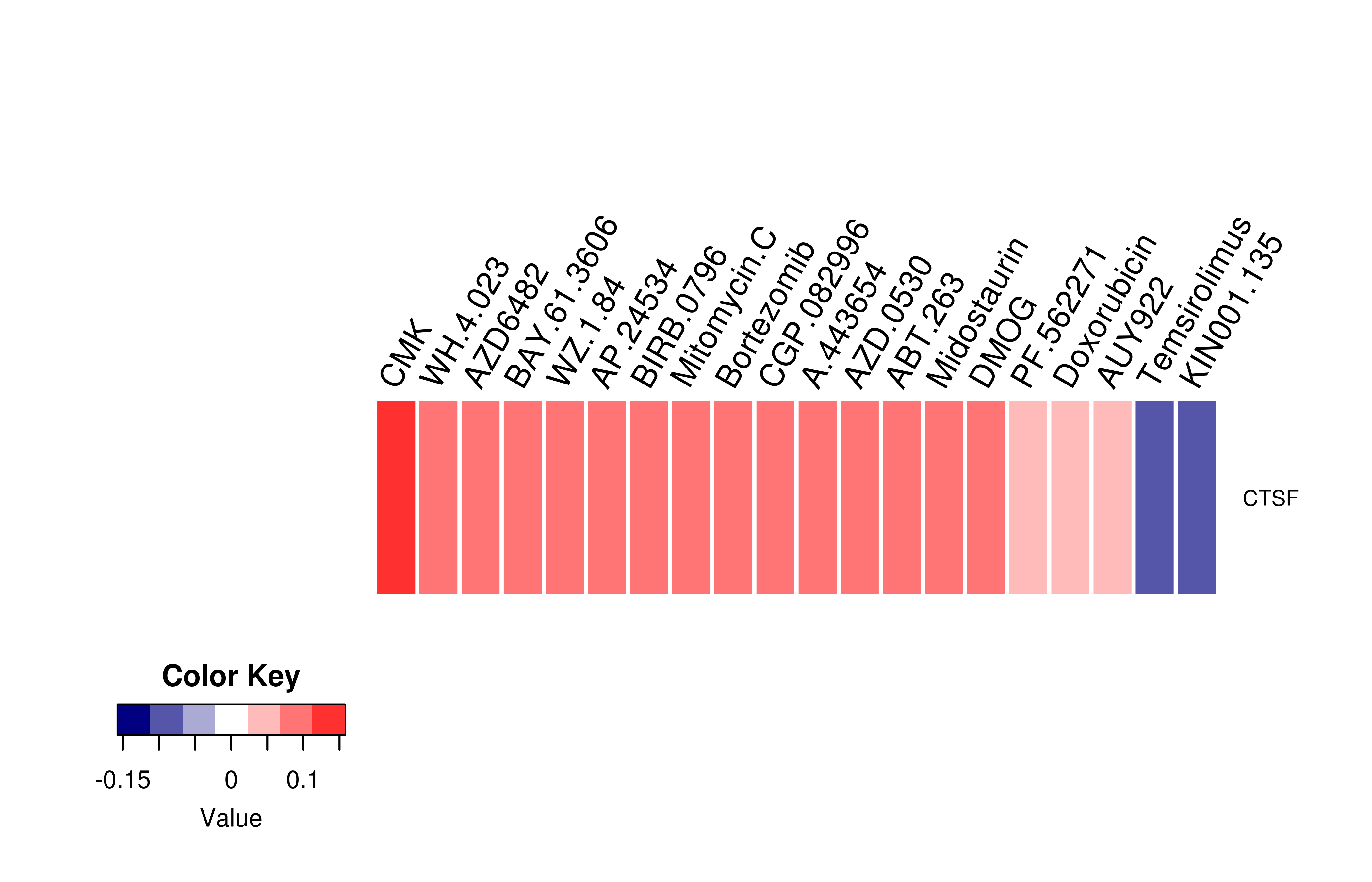
| Gene expression profile of anticancer drug treated cell-lines (CCLE) Heatmap showing the correlation between gene expression and drug response across all the cell-lines. We chose the top 20 among 138 drugs.We used Pearson's correlation coefficient. |
 |
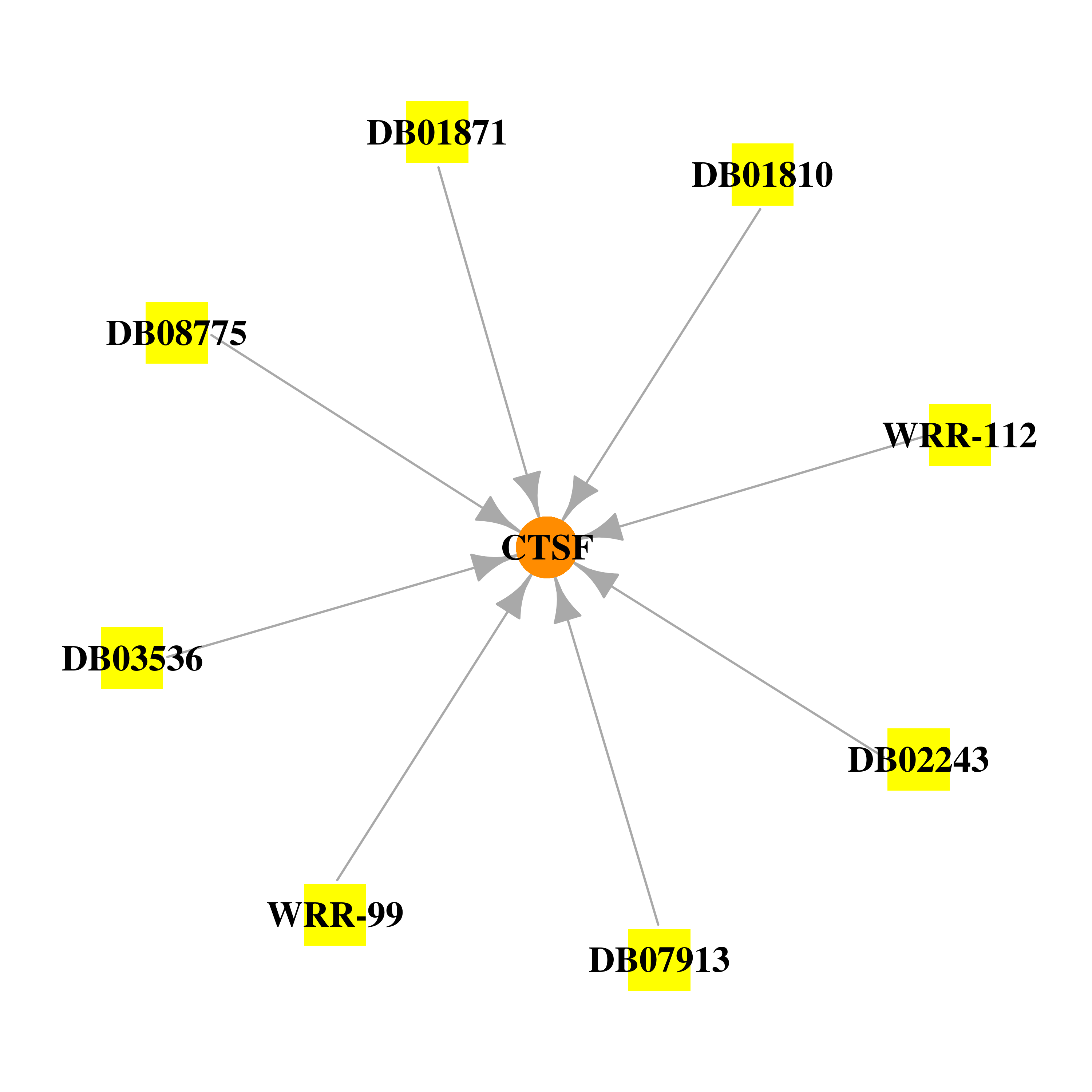
| Gene-centered drug-gene interaction network |
 |
| Drug information targeting mutLBSgene (Approved drugs only) |
| Drug status | DrugBank ID | Name | Type | Drug structure |
| Experimental | DB01810 | [1-(1-Methyl-4,5-Dioxo-Pent-2-Enylcarbamoyl)-2-Phenyl-Ethyl]-Carbamic Acid Benzyl Ester | Small molecule | 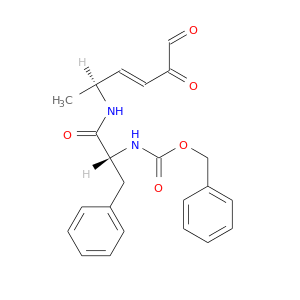 |
| Experimental | DB01871 | [1-(1-Benzyl-3-Hydroxy-2-Oxo-Propylcarbamoyl)-2-Phenyl-Ethyl]-Carbamic Acid Benzyl Ester | Small molecule | 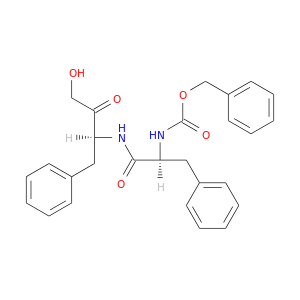 |
| Experimental | DB02243 | 4-Morpholin-4-Yl-Piperidine-1-Carboxylic Acid [1-(3-Benzenesulfonyl-1-Propyl-Allylcarbamoyl)-2-Phenylethyl]-Amide | Small molecule |  |
| Experimental | DB03536 | Benzoyl-Arginine-Alanine-Methyl Ketone | Small molecule | 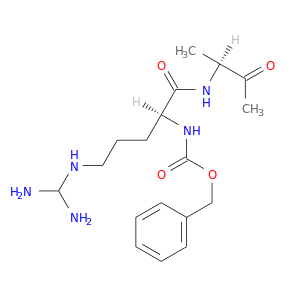 |
| Experimental | DB03573 | WRR-99 | Small molecule | 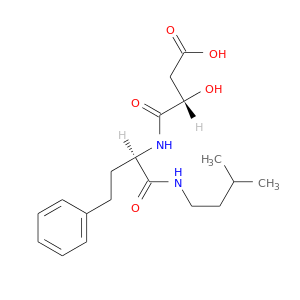 |
| Experimental | DB03691 | WRR-112 | Small molecule | 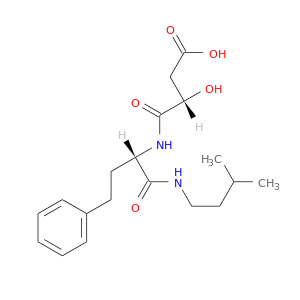 |
| Experimental | DB07913 | HOMOPHENYLALANINYLMETHANE | Small molecule | 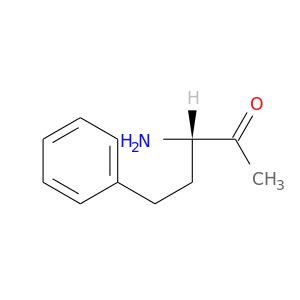 |
| Experimental | DB08775 | BENZOYL-TYROSINE-ALANINE-METHYL KETONE | Small molecule |  |
| Gene-centered ligand-gene interaction network |
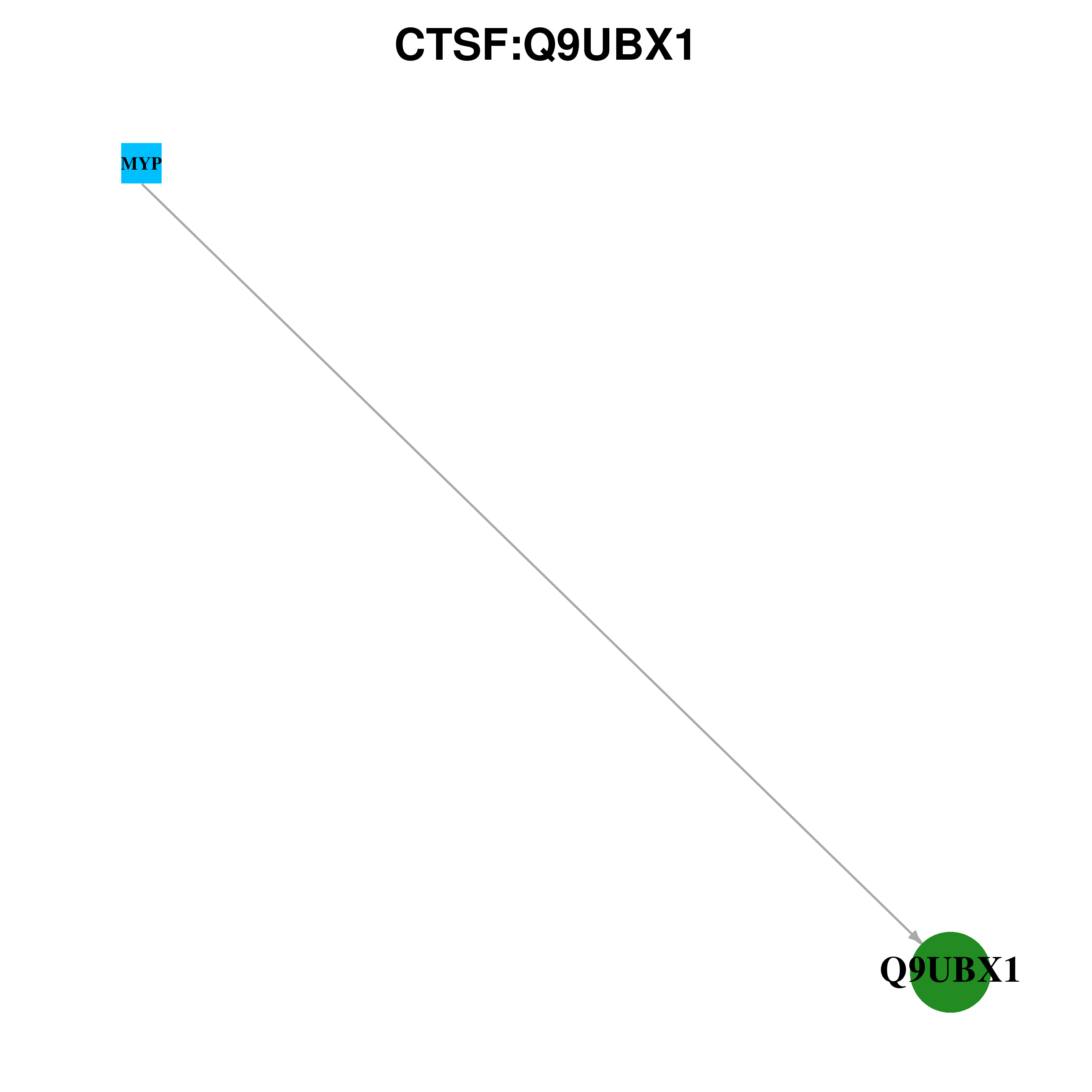 |
| Ligands binding to mutated ligand binding site of CTSF go to BioLip |
| Ligand ID | Ligand short name | Ligand long name | PDB ID | PDB name | mutLBS |
| Top |
| Conservation information for LBS of CTSF |
| Multiple alignments for Q9UBX1 in multiple species |
| LBS | AA sequence | # species | Species |
 |
Copyright © 2016-Present - The University of Texas Health Science Center at Houston |